01 / Start with the structure

Find the fit features.
Then find your pair.

The best starting point is a support design you can verify—not a rule that bans your favourite shape.

01 / Start with the structure

Your style. Better supported.

Shape is personal. How the frame sits is the first thing to check.

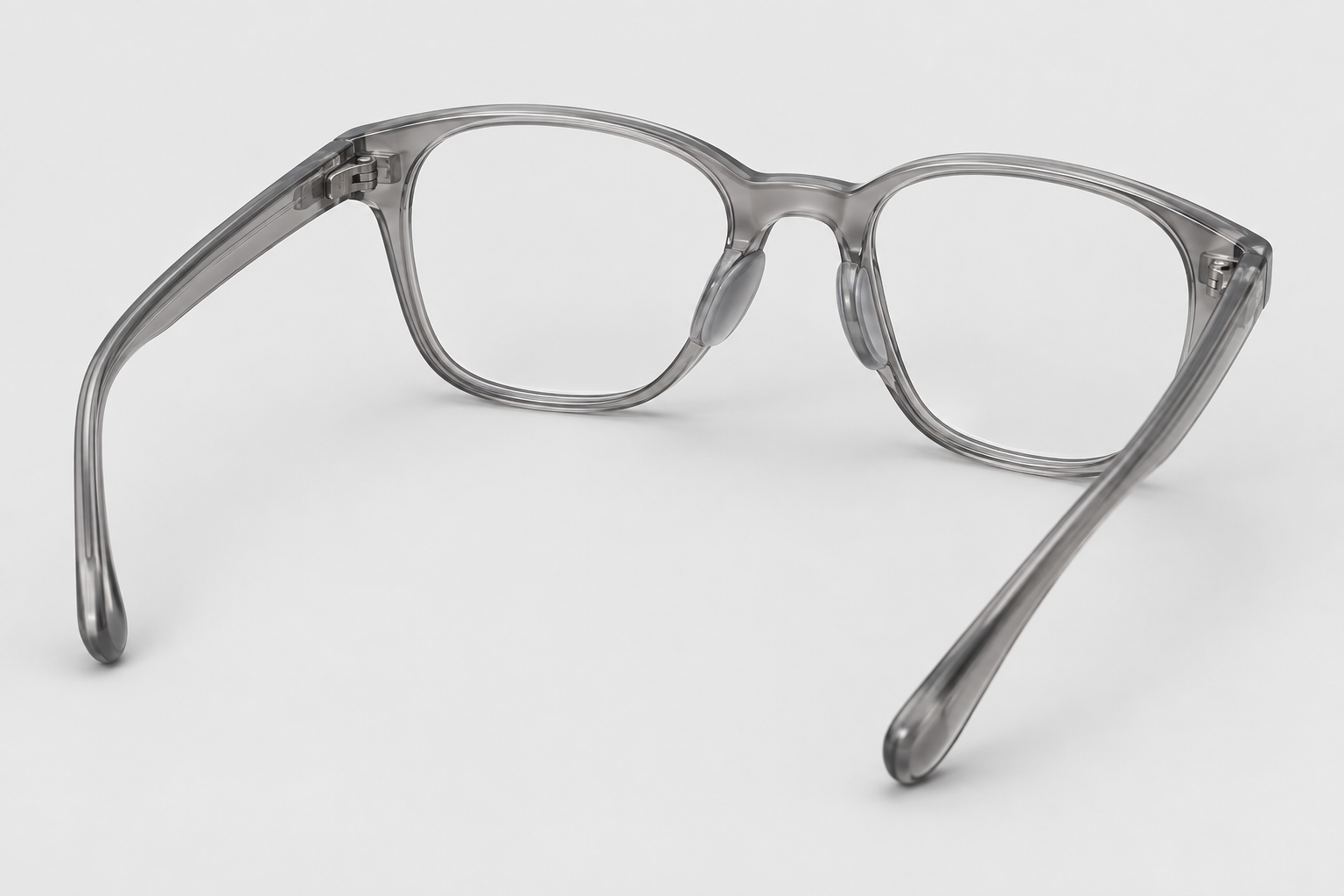
Illustration of a generic acetate frame with built-in nose support01
Built-in bridge support · Illustration

Start here

A low-bridge design,
in a shape you like.

Look for the exact low-bridge version with documented nose support. Check the width and lower rim; the label alone cannot confirm cheek clearance.

Explore this support style
Why start here?

Low-bridge support and cheek clearance are separate questions. A dedicated version is a useful starting point, while dimensions and an in-person fitting help test the rest.

Source: Warby Parker fit overview ↗
Read the full fit guide Evidence, design features & limitations
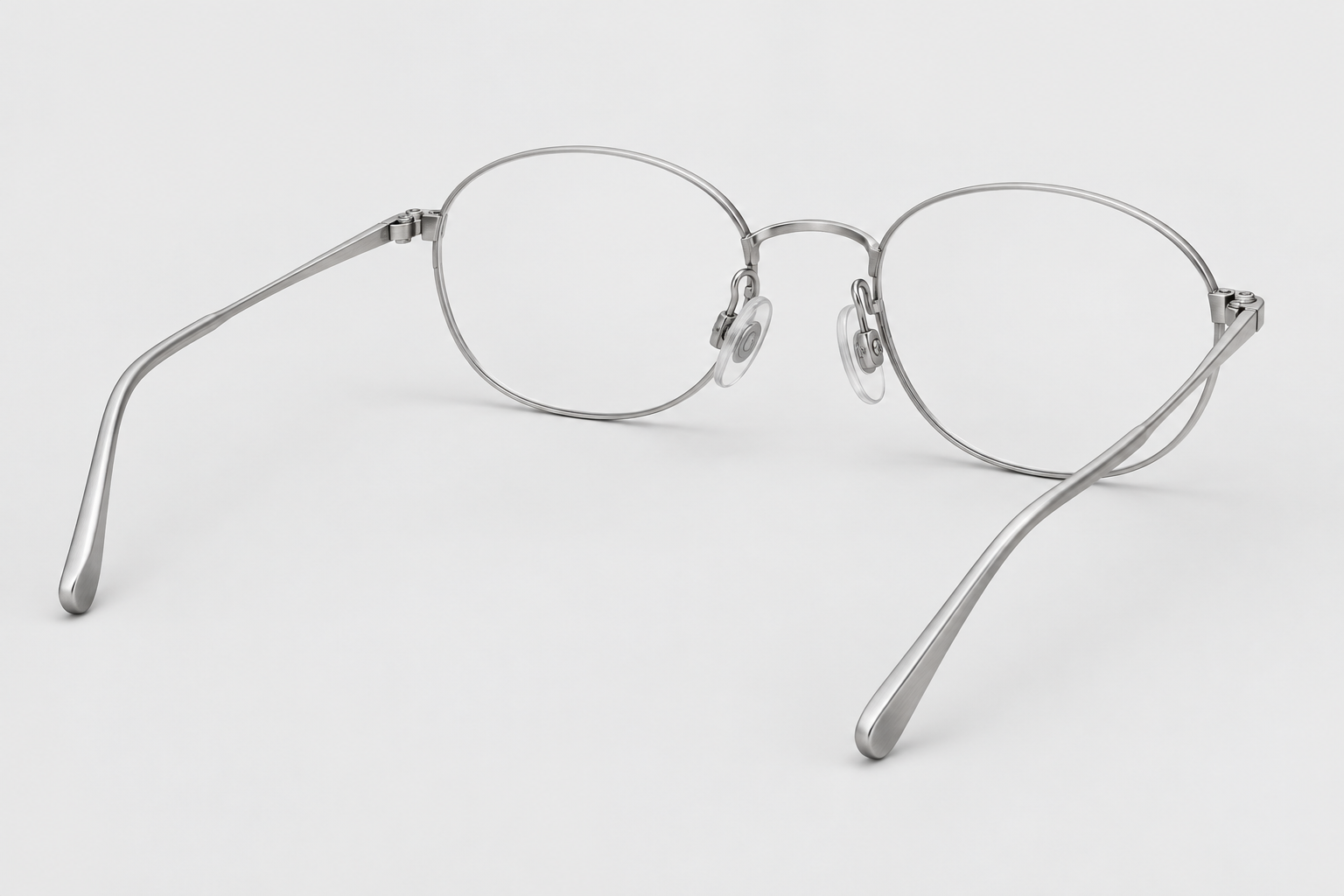
Illustration of a generic metal frame with separate adjustable nosepads02
Adjustable nosepads · Illustration

Also consider

Adjustable pads.
More room to fine-tune.

Explore frames with verified adjustable nosepads. They offer another support route; check the adjustment range, frame width and cheek contact.

Explore adjustable frames
What can adjustment change?

Separate pads give a fitting professional a way to alter support. They do not guarantee that every frame will stop slipping or touching your cheeks.

Source: JINS fit guide ↗
Read the adjustment guide What pads can change—and what they cannot
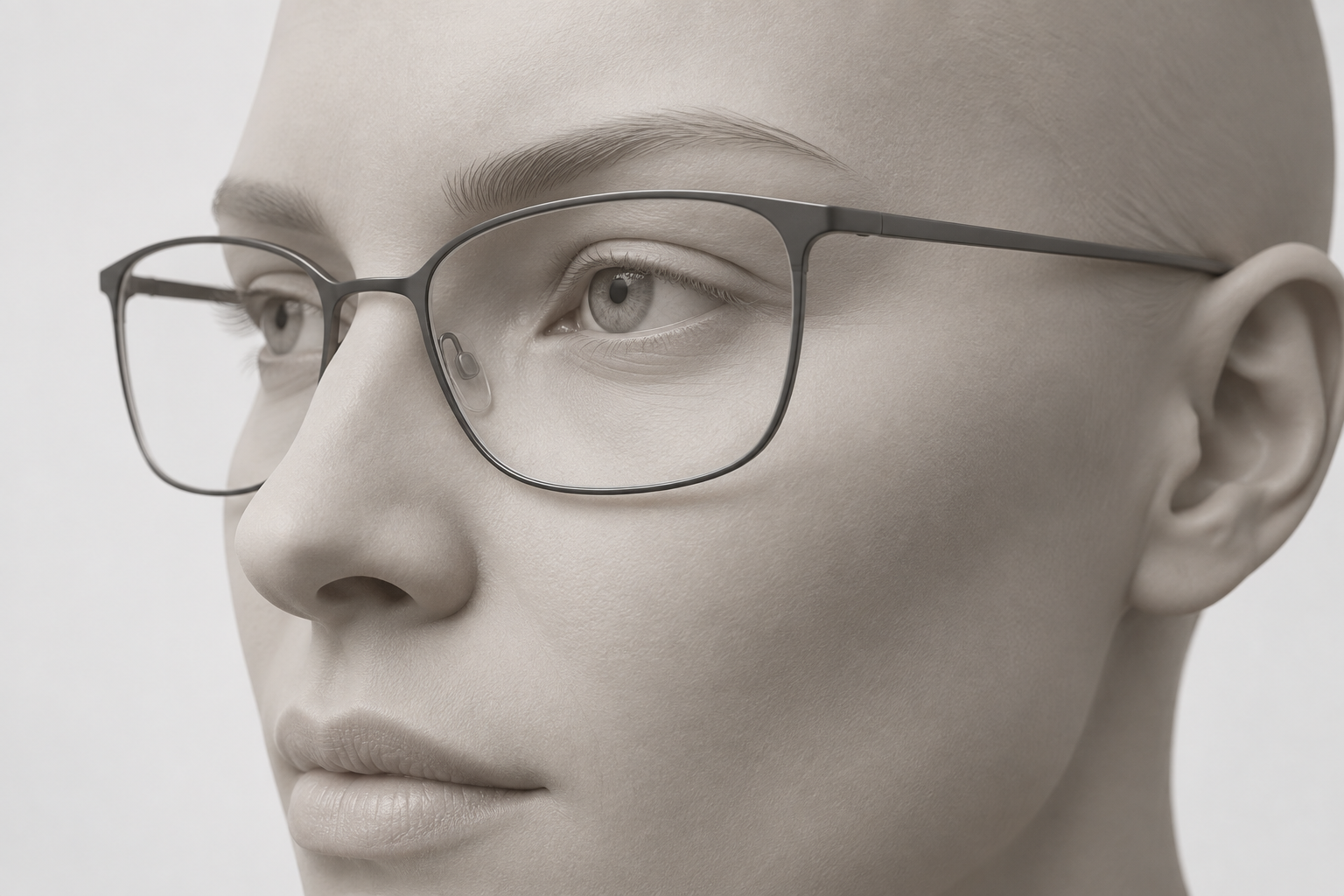
Conceptual illustration showing the lower rim and cheek area; not a fit measurement03
Lower rim & cheek clearance · Illustration

Avoid if…

The fit problem
is still there.

Reconsider a frame if it still rests on your cheeks, lifts when you smile or repeatedly slides after a fitting check. Missing data calls for a closer look.

Know what to check
Is any shape off-limits?

No shape is universally unsuitable. A known fit problem is a reason to reconsider; a missing measurement is a reason to investigate, not an automatic rejection.

Read the cheek-clearance guide Fit checks, exceptions & source notes

Illustrations explain the frame features. Your individual fit still needs a fitting check.

The reason behind the recommendation

Support at the nose.
Space at the cheeks.

One does not automatically give you the other. Look past the shape and check how the whole frame is designed to sit.

Now explore the frames
01

Check the bridge support

Find the exact low-bridge version, or documented adjustable pads. Then check whether that support sits evenly on your nose.

Look for: a side or rear view and a construction description. A front photo or “Asian fit” label alone leaves questions open.

See the support diagrams & steps
02

Check the whole width

The first number on a temple measures one lens. Ask for the full frame width and compare it with a pair that fits you well.

Watch out: “Small” is not a shared standard. Adding two lens widths and the bridge does not give the full frame width.

Learn to read the measurements
03

Check the lower rim on you

During a fitting, look straight ahead, then smile. Notice whether the lower rim rests on your cheeks or the frame lifts.

Reconsider if: contact, slipping or pressure persists after appropriate adjustment. A good product description cannot settle this for you.

Follow the try-on checklist

Documented support profiles

Adjustable nosepad support ↗

Dedicated low-bridge support ↗